

So I’ve got this one Lasius neoniger queen who I’m going to take out of hibernation soon. However, it seems like this queen can hardly wait!
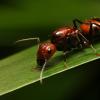
For reference, here is a photo of this queen before diapause. Looks pretty normal, right?
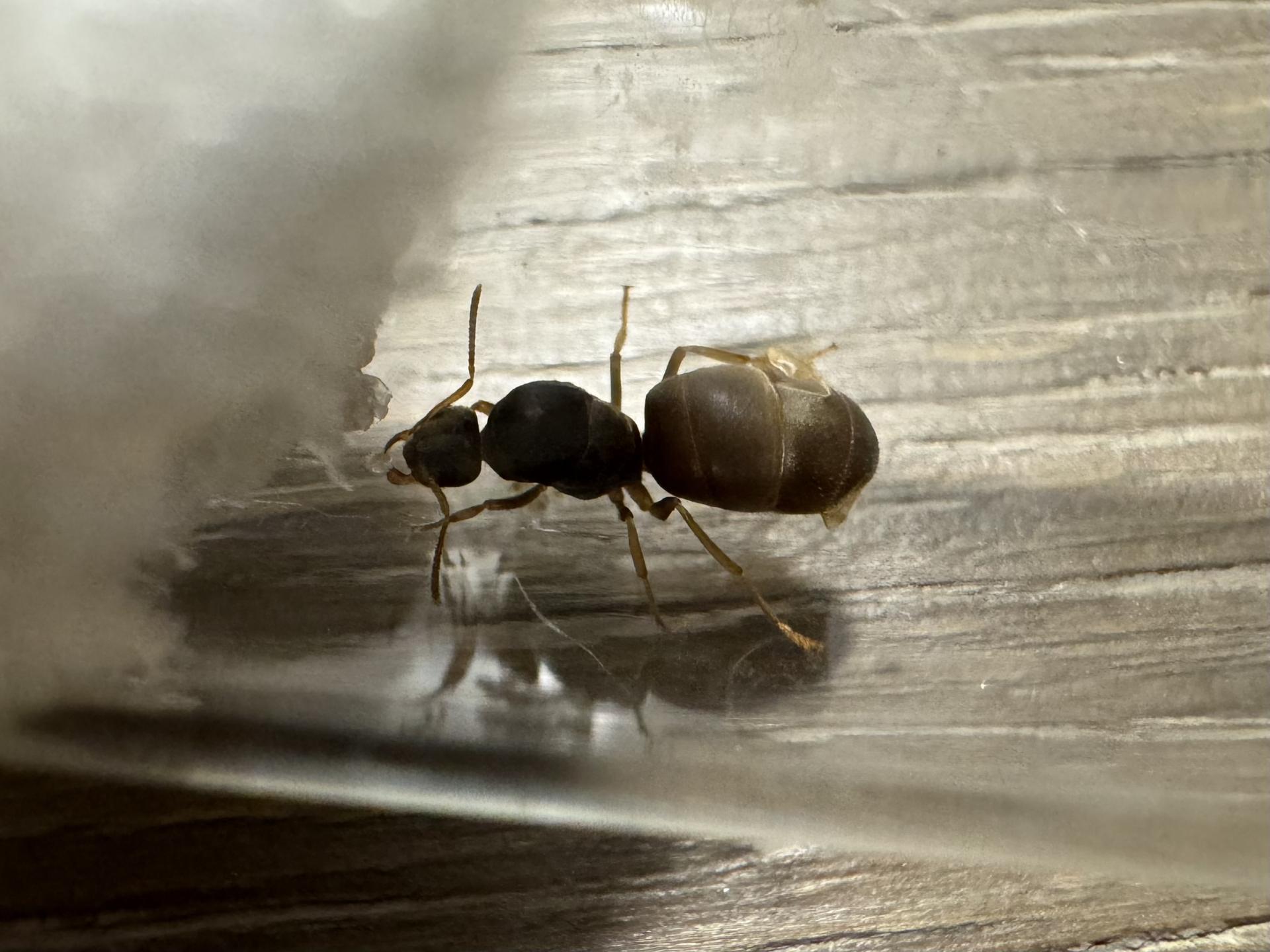
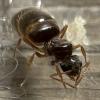
Well, this is her now…
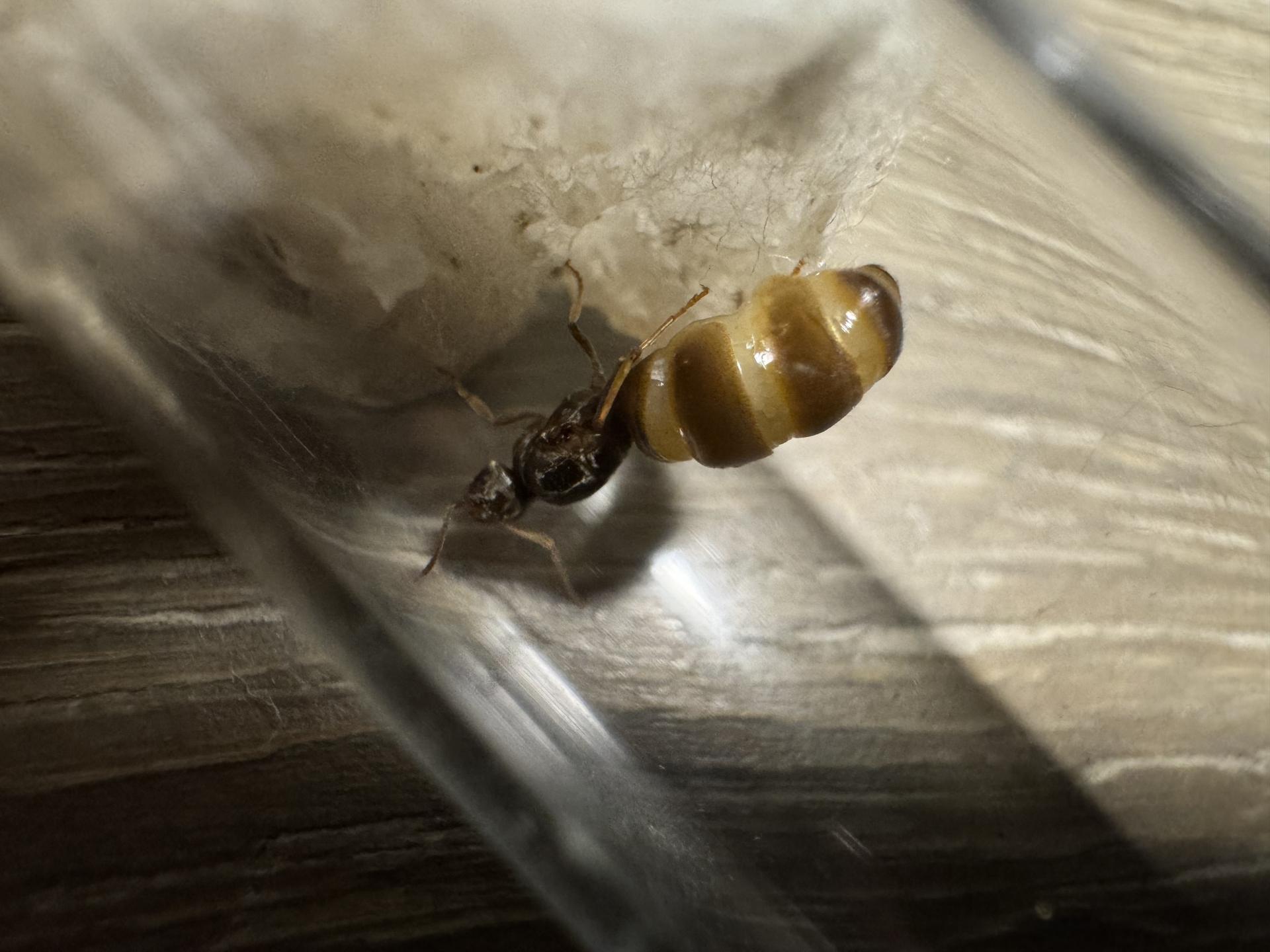
Her gaster literally looks like it’s about to explode.
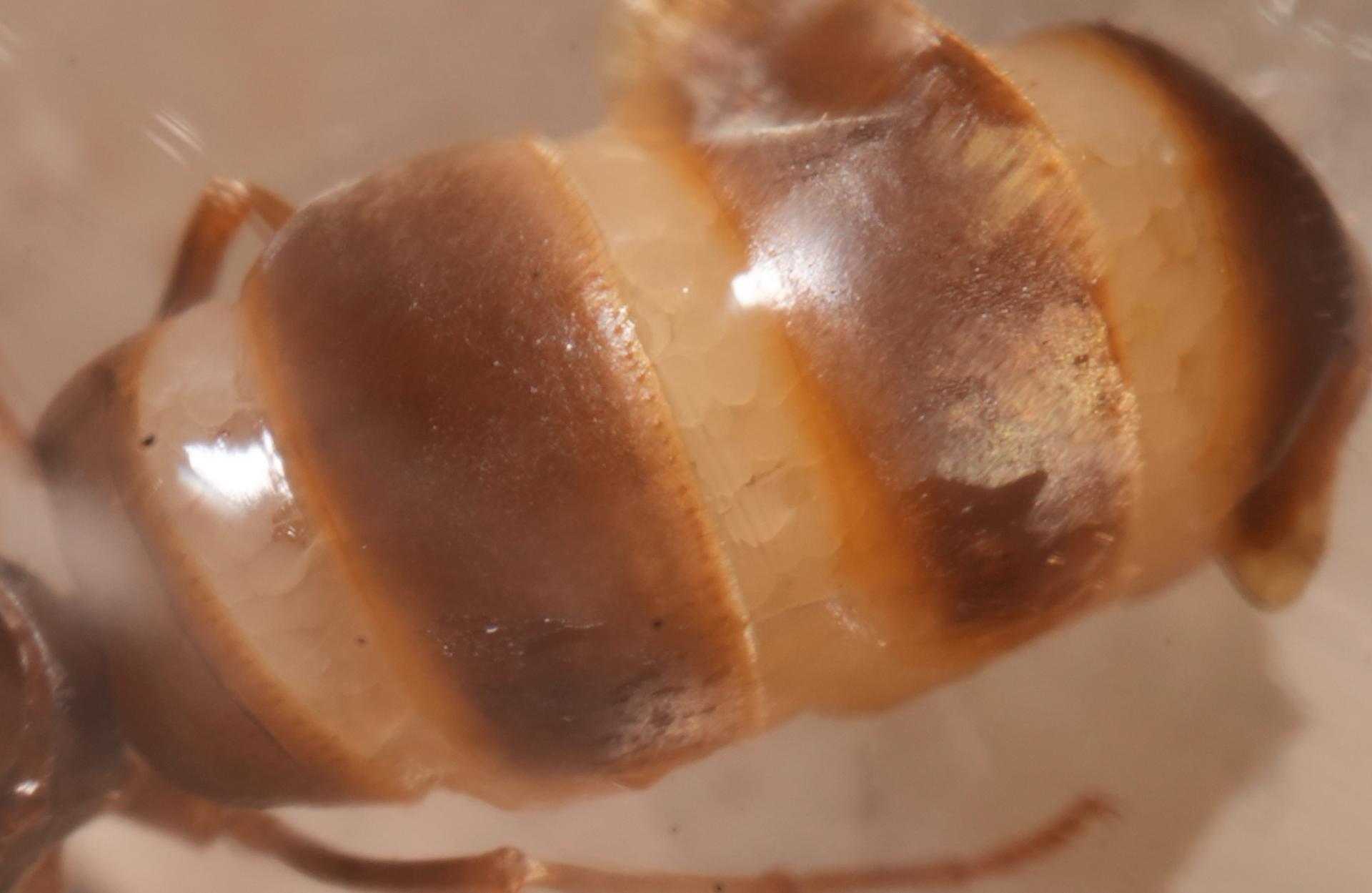
I really thought that she was infected with a parasite or something. And honestly, that still isn’t off the table, But when I zoomed in on her you can actually see the individual eggs that she’s producing, so I think that she is just super physogastric. Hopefully, her first batch will do well.
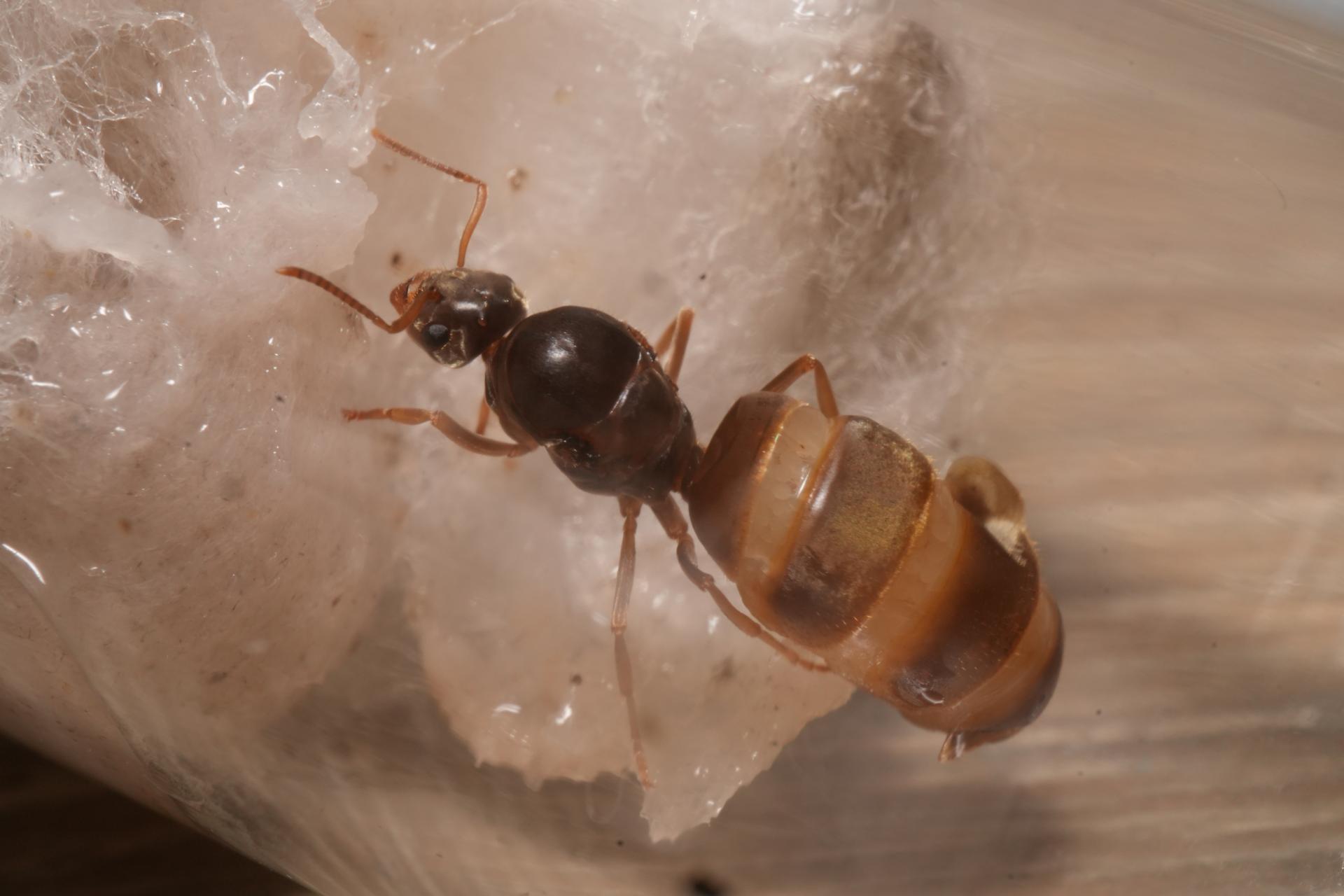
Here is the closeup photo of her gaster. It has expanded so much that the thin membrane is practically see-through. Look closely and you can see each egg clustered inside.